Pipe Insulation Installation Near Me
Starting price: Call for pricing
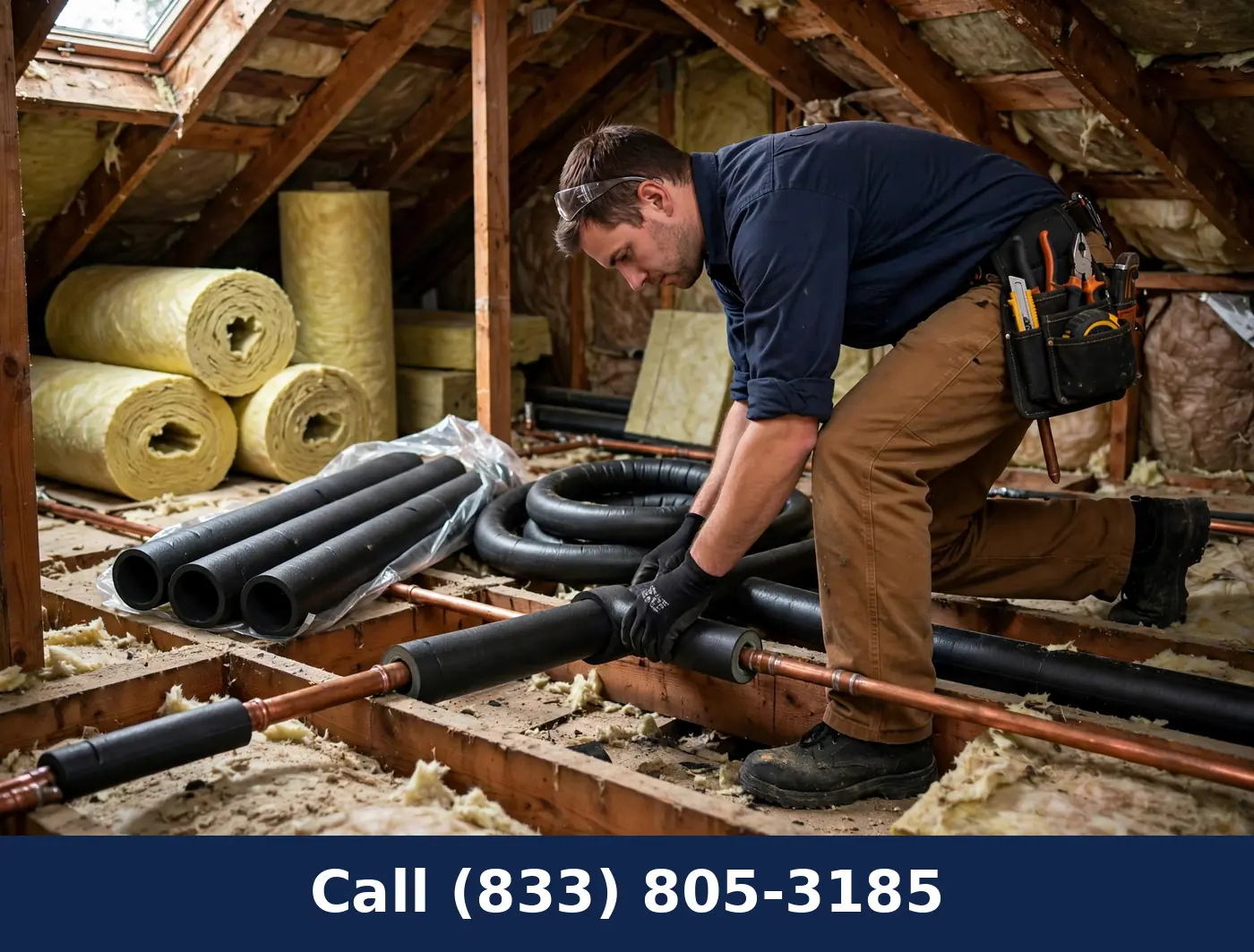
Plumbing Services Usa installs pipe insulation on exposed water lines in basements, attics, crawl spaces, and garages. The right insulation cuts heat loss, stops condensation drip, and helps pipes survive cold snaps. Call (833) 805-3185 for an assessment.
What Pipe Insulation Does — Insulation wraps your water pipes in a thermal blanket that slows heat transfer in both directions. On hot lines it keeps heat in the water; on cold lines it keeps room heat and moisture out.
Where It Matters Most — Exposed pipes in unheated basements, attics, crawl spaces, and garages benefit the most. Outdoor spigot lines and pipes along exterior walls come next, especially in colder regions.
Materials We Use — Slit foam sleeves slide over straight runs quickly and suit most residential pipes. Fiberglass handles higher temperatures, making it the pick for hot water lines near the heater.
Closed-cell rubber resists moisture, suiting damp crawl spaces, while foil-faced wrap adds UV protection for sun-exposed pipes.
Why Sealing the Gaps Counts — Insulation only works as a continuous blanket, so every joint, elbow, and valve gets covered and taped. A single bare elbow can bleed enough heat to undo the insulation around it.
Condensation and Noise — Cold pipes sweat in humid air, and that drip feeds mold and stains over time. A sealed vapor barrier around the pipe stops the sweating, and the foam layer also muffles water noise.
Cost Factors — Cost follows the length of pipe, the material chosen, and how hard the runs are to reach. Call (833) 805-3185 and Plumbing Services Usa will survey your exposed pipes and quote the job exactly.
Features
- Foam sleeve insulation for straight pipe runs
- Fiberglass wrap for high-heat hot water lines
- Rubber insulation for damp basements and crawl spaces
- Foil-faced wrap for outdoor and UV-exposed pipes
- Sealed joints and elbows with no gaps
- Heat cable pairing for extreme cold spots
Benefits
- Hot water arrives hotter using less energy
- Cold pipes stop sweating in humid weather
- Less risk of burst pipes in winter
- Quieter plumbing with less pipe noise
- Neat, sealed runs instead of bare pipe
- The right material matched to each location